Fact Checked by


7 Card Stud was the king of poker from its origins in the late 1800s until the late 20th century, when Texas Hold’em overtook it as the most popular variant. While no longer at its peak, it remains a favorite among many poker enthusiasts and continues to be a staple in both card rooms and online poker sites.
In this guide, we’ll explore the game in detail , breaking down the rules, how to play, and how it compares to other poker formats. You’ll also find some expert tips on how to enhance your gameplay.
What is 7 Card Stud?
Seven-card stud has a storied history that dates back to the American Civil War, when poker gained widespread popularity across the US with soldiers. Stud became an “official” game when it featured The American Hoyle: The Gentleman’s Handbook of Games.
In the early twentieth century, 7 Card Stud became the most popular stud poker variant, and it remained one of the most popular poker games until around the 1970s, which saw the rise of Texas Hold’em.
The aim of 7 Card Stud poker is the same as most poker games: your goal is to make the best-ranking poker hand. The hand rankings are the same as in other poker variants. The most significant difference between 7 Card Stud rules and games like Omaha and Texas Hold’em is that there are no community cards, and players are dealt seven cards, four being face-up and three face-down.
7 Card Stud Hands Ranking
If you’ve ever played any type of poker, you’ll probably already know the 7 card stud hands ranking as standard rankings are the same as what would find in Texas Hold’em or Omaha. If you are new to poker or just need a quick refresher, you can view the rankings in descending order in the table below.
| Hand | Description | Approximate odds |
|---|---|---|
| Royal Flush | A, K, Q, J,10 of the same suit | 1 in 31,000 |
| Straight Flush | Any five consecutive cards of the same suit, e.g., 4h, 5h,6h, 7h, 8h | 1 in 3,600 |
| Four of a kind | Four cards of the same rank e.g. 6s, 6d, 6h, 6c | 1 in 600 |
| Full house | A three-of-a-kind and a pair 7h, 7d, Jd, Jc, Js | 1 in 38 |
| Flush | Any five cards of the same suit 2h, 5,h, 7,h,10h, Ah | 1 in 32 |
| Straight | Five consecutive cards of any suit, e.g. 7d, 8h, 9h, 10d, Js | 1 in 21 |
| Three of a kind | Three cards of the same rank, e.g., Qs, Qh, Qc | 1 in 6 |
| Two pair | Two sets of pairs, e.g., Jh, Jd, 9c, 9h | 1 in 3.5 |
| Pair | Two cards of the same rank e,g. Kh, Kd | 1 in 1.5 |
| High card | The highest-ranked card | N/A |
How to Play 7 Card Stud – Understanding the Rules
Despite having the same hand rankings, 7-Card Stud poker rules differ quite a lot from the most popular variations at online poker sites like Hold’em. Firstly, in 7-Card Stud, there are no community cards. In 7 Card Stud, players start with three cards, two dealt face-down and one dealt face-up. Each 7-Card Stud dealing and betting round is referred to as a street, and the first round is known as the third street (because players have three cards).
In the fourth, fifth, and sixth streets, players are dealt one face card each, so after the sixth street, players will have six cards: four up cards, which everyone can see, and two down cards. In the final seventh street, players receive one final card face down before a final round of betting and the showdown if more than two players remain.
How to Deal Seven-Card Stud
To help you better understand the rules for rules for 7 card stud, we will break down exactly how to deal Seven Card Stud and look at each stage in a hand.
7 Card Stud Games Variations
Now that you know precisely what Seven Card Stud is, let’s examine some popular variations of the game.
7 Card Stud Hi-Lo
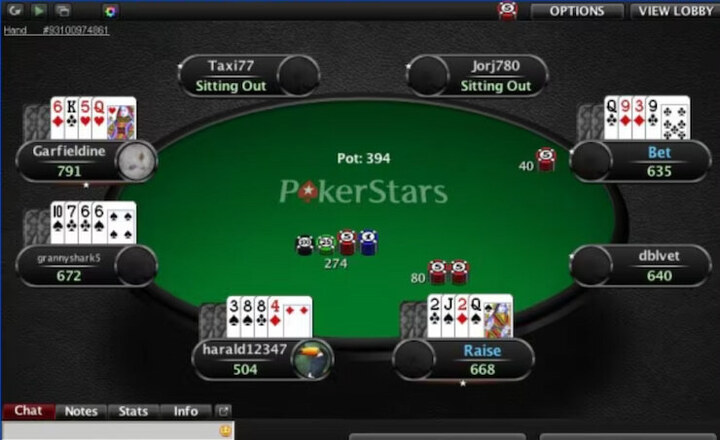
7 Cards Stud Hi Lo, also known as 7 Card Stud Eight or Better, is a split pot version of regular 7 stud. Like in a standard game, the pot is split between the person with the highest-ranking hand, but the other half of the pot goes to the player with the lowest-ranking hand.
The low hand must contain five cards of rank 8 or lower to qualify, hence the name “eight or better.” The gameplay and betting rules are exactly the same as in normal 7 card stud with the same number of streets and betting limits.
Razz

Razz uses the same standard Seven Card stud rules, except the winner is whoever has the lowest-ranking poker hand. The game follows the same 7 Card Stud dealing structure, and there are the same number of streets. Straights and flushes do not count against you, so the best possible hand in Razz is A, 2, 3, 4, 5, which is known as a “wheel”.
HORSE
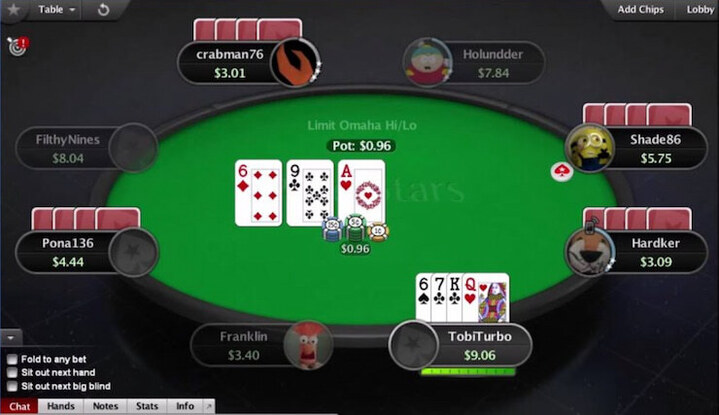
Horse is not a 7 card stud game per se; it is a multi-game form of poker that incorporates five different poker variations, which are:
- H – Hold’em (Texas)
- O – Omaha
- R – Razz
- S – Seven Card stud
HORSE starts with players playing Texas Hold’em, and the game changes after a set number of hands or time period. All of the games are typically played in limit format but are sometimes played with different betting structures.
Seven Card Stud Cash Games vs Tournaments
Like most variants of poker, 7-Card Stud is available on poker apps and desktop sites in cash games or tournaments. We examine how these two ways of playing the game differ.
Cash Games
The most significant difference between 7 card stud poker games and tournaments is that chips have a real monetary value, so whatever amount of chips you win or lose, you lose or win that amount of cash.
You can join a table whenever you want and play for as long or as little as you wish. You can also buy more chips at any point, so if you are low-stacked or have nothing left, you can just top up. The stakes also always remain the same at cash games, unlike tournaments, where stakes will periodically increase.
Tournaments
In Seven Card Stud poker tournaments, all players pay a set buy-in amount and start with an equal amount of chips. You are eliminated when you have no chips left (although some tournaments offer rebuys).
Tournaments are played until all but one player has been eliminated, and stakes increase to ensure that tournaments don’t go on for days as stacks increase. Typically, 10-20% of players “finish in the money” and win a cash prize, with first place taking roughly 30-50% of the total prize pool.
Reading a Seven-Card Stud Board
Reading the board in 7 Card Stud is very different from Texas Hold’em. In Hold’em, with just two hole cards and five shared community cards, it’s easier to narrow down what hands might beat yours. In Stud, however, you see four of each opponent’s cards while three remain hidden. You must also factor in the exposed cards on the table and those that have already been folded.
This makes hand reading much more complex. For example, on 7th Street in a six-player game with three opponents still in, you’ll see 12 of their upcards, your own hand, and as many as 8 folded cards. Processing all this information quickly to assess possible hand combinations takes strong memory, sharp observation, and plenty of practice.
7 Card Stud Tips
Seven-card stud offers a very different challenge to other variants of the game found at poker online casinos, like Hold’em and Omaha, because you can see many of the cards other players hold. This means that Seven Card Stud strategies are often different from other poker strategies. Here are some key differences to consider, and here are our top 5 professional 7 Card Stud tips on how to improve your performance.
7 Card Stud vs Texas Hold’em
For most of the twentieth century, stud poker was the most popular poker game, but Texas Hold’em surpassed it in the 1970s and has been the most played since then.
The most significant difference between Texas Hold’em and Seven Card Stud is that Hold’em uses community cards shared by all players, while in Stud each player receives seven individual cards to make their best hand. With no community cards but up to four of each opponent’s cards visible, hand strength in Seven Card Stud is far more situational and variable.

For example, starting with an A, K in Texas Hold’em is always a strong hand, but in stud, it depends on what other cards players are showing. If you have an A and a K in the hole, in stud, but there are two Aces and a King showing on the board in other players’ hands, then the strength of your A and K is reduced significantly.
7 card stud betting rules also differ significantly from those in Hold’em. Firstly, stud is almost exclusively played in limit format, but Hold’em is played in all betting formats but most commonly played in pot limit or no limit, which leads to more aggressive plays. In addition, there’s a maximum of four betting rounds in Hold’em, but up to five in 7 Card Stud.
Finally, in 7-card stud poker rules, the position of players isn’t set and depends on who has the weakest hand showing in the first round and the strongest in subsequent hands. So, you can be first to act in one round, but in the next, depending on the cards dealt, you may be last to act.
Fixed Limit Betting
In 7 Card Stud, both online and live play are usually in a fixed-limit format, meaning all bets and raises must follow set increments.
At a $5/$10 table, the first two betting rounds (3rd and 4th Street) use the small bet of $5. If one player bets $5, the next can call or raise to $10, with further raises continuing in $5 steps.
From 5th Street onward, the big bet of $10 applies to all bets and raises. Each round also has a limit on the number of raises allowed, typically four.

Joe YarnoldCasino & Betting Expert


Other Useful Guides for Poker Players
The Bottom Line
If you’ve played poker before, you’ll quickly pick up 7 Card Stud rules, and even beginners can learn them fast. What makes the game unique, though, is its fixed-limit betting and the challenge of having some of your cards revealed to all players.
While not as widespread as Hold’em or Omaha, there are several real-money online poker sites that still host 7 Card Stud games. Our top recommendations are CoinPoker and ACR, which both offer multiple poker formats and generous bonuses.
FAQ
How to play 7 card stud?
What is 7 card stud poker?
How do you deal 7 card stud?
How to win at 7 Card Stud poker?
How many players can play 7 Card Stud?
Can you play 7 Card Stud online for free?
Responsible Gambling
It’s crucial to practice responsible gambling to prevent potential risks associated with gambling addiction, such as financial troubles and mental health concerns. If you think you might be facing a gambling issue, it’s essential to seek help. Below are some resources that can provide support in addressing the issue.