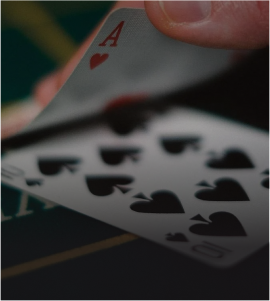
A slow roll in poker is delaying showing your hand even though it’s strong and you’ve most likely already won. It is a big faux pas in poker etiquette, and those who do it will likely be the least popular person at the table. In this article, you can discover exactly what slow rolling is. You will also learn why it’s frowned upon, where it falls within the rules of poker, and how to avoid doing it.
What Does it Mean to Slow Roll in Poker?
A slow roll is one of the biggest breaches of poker etiquette, but what does it mean to slow roll in poker?
Slow rolling is when a player with a very strong hand, either most probably or certainly the winning hand, delays showing their cards at the showdown and/or misinterprets their hand, indicating they’ve lost when they know they’ve won. Here are a few examples of slow rolling in poker.
A player takes a long pause before calling an all-in bet when they have the nuts(the best possible hand) instead of snap-calling (making the call instantly).
A player pretends that they might fold before then calling and revealing an unbeatable hand.
After seeing their opponent’s hand, a player takes a long time to flip their cards over, knowing they’ve won.
A player knows they have the best hand but has a long discussion about all the possible hands they could have before making the call.
Why is Slow Rolling Frowned Upon?
Some people may wonder, “Why is slow rolling frowned upon?” After all, doesn’t it just offer a little in the way of drama?
Well, slow rolling is frowned upon for a few reasons. Most importantly, it’s seen as a disrespectful way of taunting opponents and is largely considered unsporting behavior. It’s viewed in very much the same way as celebrating right in front of someone’s face when you score in football or cheering when an opponent misses a putt in golf.
The other reason, to a lesser extent, is that you are just wasting everyone’s time at the table. Poker tournaments are notoriously long affairs. Even a friendly tournament with a few friends at home can take hours, let alone large multi-table tournaments at casinos. Players will get annoyed if someone is needlessly extending the tournament.
There are some exceptions to this rule, with events like Max Pain Mondays encouraging players to engage in trash talk and slow-roll their opponents. This type of content is popular among poker streamers, but most pro tournaments adhere to a much stricter code of poker ethics.
How to Avoid Slow Rolling in Poker
Now you know what a slow roll in poker is. Unless you want to be the most targeted person at the table or never be invited back to your friend’s games, you probably want to avoid it. So, let’s take a look at some tips on how to ensure you don’t perform this poker faux pas.
Immediately Reveal Your Hand: When you call an all-in and you are the last person to act, show your hand immediately.
Call Quickly When You Have the Nuts: You should always call an all-in immediately when you know you have an unbeatable hand.
Understand Poker Rankings: You should fully understand poker rankings and be aware of the situation on the board so you know when you have the nuts.
Don’t Get Distracted: If you’re scrolling through your phone or chatting with someone else, you may unintentionally slow roll.
Hollywood vs Poker Slow Roll
While slow rolling is a big no-no at online casinos and land-based poker rooms, Hollywooding or slow playing are acceptable and legitimate poker strategies. The two acts may seem similar, but there is one major difference: Hollywooding is done during active play, while a slow roll occurs when no more actions are to take place.
For example, say you have a J and 10 of spades in the pocket, and after the turn, there’s a 9,8, Q of spades, and an Ace of hearts on the board. You’ve got a straight flush, one of the best poker hands. There’s one opponent in the hand, and they make a bet. You spend a long time debating whether to call and act if your hand is weaker than it is.
This is Hollywooding and perfectly fine as you are trying to deceive your opponent into thinking you have a weak hand so they will commit more money to the pot on the river. There’s a strategic element to the deception, which can actively improve your chances of winning at poker.
If a 5 of hearts comes on the river, you now know you have the best hand. If your opponent then goes all in and you spend a long time debating whether to call, you are now slow rolling. There’s no more action to be taken after you, and you know you have the winning hand and there’s nothing to be gained from indicating a weaker selection of cards. So, at this point, you should immediately call the all-in.
Live Poker Slow Rolling vs Online Poker Slow Rolling
Live games are not the only place a slow roll in poker can happen. Players can also slow roll at offshore poker platforms. However, it is seen as much worse to slow roll in live games than online, and we will explain why.
Slow Rolling in Live Poker
One reason poker slow rolling in live games is perceived as worse than online is that it is almost always intentional. In live games, players are only playing one game and one hand at a time and should be completely focused on the game. They can’t use the excuse of not being aware of the situation.
Additionally, at live games, players are face-to-face, and it’s much easier to upset the atmosphere. If players start to argue or berate each other vocally, it’s different from people angrily typing in a chat box online.
To avoid committing the poker “sin” of slow-rolling, make sure to pay close attention while you remain in hand, particularly at the showdown. Make an all-in call quickly if you have the nuts, and don’t delay in revealing your hand.
Slow Rolling in Online Poker
Slow rolling online is much more forgivable than in live games because it’s often unintentional. Players online often play multiple games at the same time, so their attention might not be on the game, and the delay is not on purpose.
Other potential distractions when playing online include connection issues, DoorDash arriving, etc. Slow rolling online is also somewhat limited as there are timers, and players only have a certain amount of time to act.
In addition, at online poker rooms, you aren’t face-to-face, and it’s much harder to spoil the atmosphere when all players can do is write a message in chat. This simply doesn’t cause as much tension at the table.
Top 5 Examples of Tournament Slow Rolls
Due to the contentious nature of tournament slow rolls, such instances can often become heated. However, slow roll examples and confrontations offer a learning experience for new players, both in terms of poker bluffing strategy and etiquette. Here are some videos to help illustrate the point.
The Sashimi Roll - A Poker Roll Not to be confused with Sushi
The Sashimi Roll – A Poker Roll, Not to be confused with Sushi
Sashimi and Tommy Unold are stars of Max Pain Monday, which is renowned for its chaotic and occasionally controversial poker games. Sashimi in particular is well-known for her constant talking and slow rolling, with this particular example especially famous.
After being dealt a Q and J in the pocket, the first three community cards quickly gave her full house. Despite almost certainly having the best hand from a statistical perspective, she continued to show roll and even feigned a fold when a six was dealt at the turn.
After raising $400 and $1,000, she went all in on the final round of betting. Tommy was encouraged to match before she revealed her two pocket cards and faked initial surprise at the win. Then came the unfortunate bad etiquette of grabbing Tommy’s stacks, which is frowned upon in most tournament situations.
Of course, it should be noted that this type of behavior is encouraged in Max Pain Monday events, from trash-talking to slow rolls to fake folds. In this context, Sashimi played a superb hand and one that banked her a cool $6,630.
The Instant Karma Slowroll - Watch the River Card
The Instant Karma Slowroll – Watch the River Card
Our next example is also from a Max Pain Monday matchup, this time featuring Hilary and serial entrepreneur Ronnie Ebanks. On this occasion, however, Hilary’s slow rolling was ultimately unsuccessful as she lost a total pot worth $19,970.
Dealt a pair of nines in the pocket, the first three community cards saw Hilary build a full house. Ronnie had three-of-a-kind (Queens) at the flop. The initial betting rounds saw Hilary take an age to call, while at one point she implored Ronnie to “go easy on her”.
As the pot continued to grow, Hilary continued to engage Ronnie in conversation, even asking him if he had nines or queens before the river. She looked set to seal the win too, but the dealer drew a further Queen at the river, delivering Ebanks the third-highest rank poker hand (four-of-a-kind) and a dramatic win.
There are several lessons to draw from this. Firstly, slow-rolling a strong hand can backfire if you don’t have an unbeatable set of cards. The same is true if you can’t verify whether your opponent has a potentially stronger hand. It also highlights the importance of focusing on your own hand and playing it as efficiently as possible.
The Negreanu Slowroll - Poker Legend Calls for a Ruling
The Negreanu Slowroll – Poker Legend Calls for a Ruling
This incident came during a hand in the PCA Main Event in 2013. It happened in a game featuring Chris Oliver and the legendary Daniel Negreanu. It featured a premature and ill-judged clock call from Oliver, as he sought to rush Negreanu. The tactic was to potentially convince him that he had a superior hand.
If you call the clock on an opponent, you’re requesting a tourney official to impose a time limit for decision-making. This is something that Negreanu has actively called for at the pro level. He has done this to minimize instances of slow rolling and time-wasting. In this case, however, Oliver called the clock prematurely, barely 45 seconds after his own call.
Negreanu initially requested a rule check, maintaining his cool before pressing ahead and calling. His pair of pocket kings ultimately saw him win a relatively underwhelming hand, as Oliver himself had just an Ace high. Oliver has done this in previous hands to solicit a fold. However, he didn’t account for Negreanu’s ability on the felt and penchant for reading opponents.
Calling the clock so early is bad etiquette, while it isn’t recommended against skilled and experienced players. This is especially true when playing Negreanu, who is among the richest poker players of all time. It may also be a strong psychological tell that you’re attempting to bluff and rush an opponent, especially when you make the call so quickly.
Tony G Gets Slammed for Bad Etiquette
Tony G Gets Slammed for Bad Etiquette
In an intriguing episode of ‘The Big Game’ back in 2021, Tony G (Antanas Guoga) and Jason Mercer contested several tense and high-stakes hands. Tony G is renowned for his aggressive and abrasive style. However, one particular incident caused others at the table to question his etiquette.
As one hand reached the river, Tony G and Mercier were the only players left in contention. Tony G only had Ace high, whereas Mercier was bluffing with 10 and 9 in the pocket. Tony G calls and Muckier subsequently mucks his hand. Sensationally, Tony G asks his opponent what he had before imploring the dealer to open the hand.
Asking to see a losing hand is undoubtedly bad etiquette, especially in instances where the player was bluffing. Other players were quick to chime in too. This included Phil Hellmuth, who’s hardly renowned for his etiquette and good behavior at the felt. Not only was the consensus that Tony G was out of line, but it seemed apparent that he knew what he was doing too.
Mercier enjoyed some sweet revenge shortly afterward, though. He won consecutive hands directly against Tony G. The second victory saw Mercier win after the river card gave him three-of-a-kind (eights), as he banked a pot worth $87,300 in total.
Disgraceful Slow Roll - Sacha Cornil's Worst Slow Roll in History
Disgraceful Slow Roll – Sacha Cornil’s Worst Slow Roll in History
Last, but not least, we come to what’s arguably the most disgraceful slow roll in this history of televised professional poker. This occurred at the 2010 World Cup of Poker (WCOP). Here, players compete in teams and take turns to sit at the felt. If one player is knocked out, the entire team is eliminated from the competition.
This allows teams to call time-outs during matches, affording players the chance to navigate tough or underwhelming hands. When representing Germany against Canada, however, Sacha Cornils leveraged the time-out feature to slow-roll his opponents in the most drawn-out way imaginable.
While Cornils was dealt the best pocket hand in poker (a pair of Aces), his Canadian opponent Darus Suharto held pocket kings in the small blind position. Another player raised before Cornils re-raised to a hefty $8,000. Feeling confident in his hand, Suharto subsequently went all in with his kings.
The others folded before the bet returned to Cornils. Rather than instantly calling, however, he called a dramatic time-out and left the felt to converse with his team. He took a further pause when he returned before calling and showing his hand, with the Canadians decidedly upset at such a blatant example of slow rolling.
Even his teammates were far from impressed, with the German team issuing an apology for their player’s behavior during the hand.
Is Poker Slow Rolling Against the Rules?
Is slow rolling bad in poker? Yes, absolutely. It’s very bad poker manners and serves no strategic purpose. But is it against the rules? Well, no. There are no rules that prohibit slow rolling, and you will face no official punishment for it.
This is best embodied by Tony G’s request to see Jason Mercier’s losing hand. Some rules expressly prohibit players from asking to see an opponent’s hand. This is almost universally considered bad etiquette in the professional realm.
However, there’s no official punishment for such actions. However, if you do them often in a private game, you probably won’t continue to be invited. If you do them in a public game, it’s likely to sour the atmosphere of the table, and you will probably become a target for other players.
More Useful Poker Guides
Below are further guides on a variety of poker topics that can help you improve your game and improve your chances of success.
A slow roll in poker serves no real purpose other than to annoy and taunt your opponent. It usually causes unneeded tension at the table and animosity toward the slow roller. This is why it should be avoided at all costs.
To avoid unintentionally slow rolling, show your cards immediately after calling all in a showdown. If you know you definitely have or most likely have the best hand when someone goes in, don’t delay calling the all-in. When you’re ready to try your hand at poker, be sure to check out what CoinPoker has to offer.
Responsible Gambling
Poker and other forms of gambling are harmless activities that can be played for enjoyment by many. However, some can develop gambling disorders. These can have profound negative effects on their financial situation and mental well-being.
This is why responsible gambling is always vital, as it can protect you from these possible dangers. Make sure to be aware of best gambling practices and seek assistance if you believe you may have a problem.
The slow roll definition is when a player has a strong hand (most likely or certainly the winning hand) at the showdown. A slow roll in poker is different from slow playing. Slow rolling is a strategic move to get more money out of you, but slow rolling does not have strategic value. It simply delays the game and rubs salt in the wound of the losing opponent.
How does a slow roll affect the game?
A slow roll in poker will almost always cause tension at the table. It can quickly turn a friendly atmosphere into an awkward one.
Is slow roll considered a good strategy?
No, a poker slow roll is not considered a good strategy, and it’s not a strategy at all. Why is slow rolling bad? Well, unlike slow play, which is a strategy to get your opponents to commit more chips, a slow roll is done when you are the final player to act, and there’s no strategic value to it.
What is the purpose of a slow roll in poker?
The meaning of slow rolling is that you delay the action when you are the last player to act. The only real purpose of slow rolling is to taunt and annoy your opponent. Players that slow roll are typically seen as just unsportsmanlike people.
What’s the difference between slow roll and slow play?
The slow roll meaning differs from slow play meaning, mainly in when the action takes place. A slow play happens during active play when there are further actions to be taken after you act. It’s a strategy to get your opponents to commit more money to the pot. A slow roll is when you are the final player to act (often in the showdown), and there’s no strategic purpose for delaying your action.
The ReadWrite Editorial policy involves closely monitoring the gambling and blockchain industries for major developments, new product and brand launches, game releases and other newsworthy events. Editors assign relevant stories to in-house staff writers with expertise in each particular topic area. Before publication, articles go through a rigorous round of editing for accuracy, clarity, and to ensure adherence to ReadWrite's style guidelines.
Lewis is a seasoned sports writer and betting expert at ReadWrite. He has been written about sports, remote betting and sportsbooks for more than 10 years, with his work featuring in publications such as The Boot Room, Yahoo Sports and 90min. He writes most extensively about soccer, basketball, American football and boxing, but retains an interest in a huge range of sports.
Rhode Island moved closer to ending its single-operator sports betting model after the state Senate approved legislation that would bring several new sportsbooks into the market and overhaul the way...



 Fact Checked by