Fact Checked by


The Dead Man’s Hand is one of the most infamous hands in poker, steeped in history and legend. Its origins trace back to the late 19th century and are tied to the death of one of the Wild West’s most iconic figures. In this guide, we’ll explore what the Dead Man’s Hand is, the story behind its enduring lore, and how you should approach playing it if it ever lands in your hand.
What is the Dead Man’s Hand in Poker?
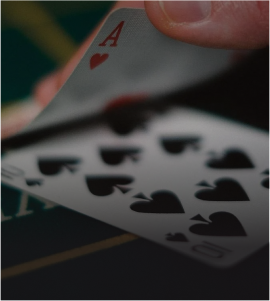
The dead man’s hand is a term for a hand containing two pairs of aces and eights, specifically the black cards: ace of clubs, ace of spades, eight of clubs, and eight of spades.
The origin of the dead man’s hand is linked to the notorious Old West figure, Wild Bill Hickock’s death. In 1876, Wild Bill was shot in the back of the head by Jack McCall while playing poker in Deadwood. According to folklore, he held in his hand two black aces and two black eights, and the name dead man’s hand was born.
What is the Fifth Card in a Dead Man’s Hand in Poker?
Like the reason McCall killed Wild Bill, the answer to “What is the fifth card in a dead man’s hand?” has never been definitively answered, and there is no historical record confirming what the card actually was.
In art, it’s often depicted as a red card, particularly the queen of hearts, the jack of diamonds, the nine of diamonds, or the five of diamonds. In a reconstruction of the original saloon in Deadwood, the fifth card is a nine of diamonds.
However, the Adams Museum in Deadwood claims to display the actual five cards that Wild Bill held in his hands. The fifth card in this hand is a queen of hearts, but more interestingly, it’s not two black aces and eights; it’s actually the ace of diamonds, ace of clubs, eight of hearts, and eight of spades.
Example of a Dead Man’s Hand
Let’s say that you are playing a game of Texas Hold’em at a poker site online and are dealt the ace of spades and eight spades. On the flop, you see the ace of clubs, the eight of clubs, and a random third card, let’s say the 7 of hearts. You now have the dead man’s hand-a pair of black aces and black eights.
How to Play Aces and Eights Dead Man’s Hand
A dead man’s hand in Texas Holdem can be a poker term that refers to holding just a singular ace and an eight in their hand, as players only start with two hole cards. It’s somewhat of a marginal hand pre-flop, and if a player has raised, most players will fold if the ace eight are off-suit. If they’re suited, then depending on the size of the raise and the number of players in the hand, it might be worth calling.
Bluff Catching
The Ace-Eight two-pair combination might not be the strongest hand out there, but it’s still a decent hand and can be used to catch a bluffer. You can scoop a decent-sized pot from someone holding a pair or even two pairs, as your Aces will rank higher. If you suspect a player has any of these poker hands, then you’re in good shape and should go ahead and call.
However, to catch a bluffer, you need to be aware of what’s on the board and what hands the other player could have. It also helps to have some knowledge of the player and think about how they have bet in previous hands in the session or matches if you’ve played them before.

Joe YarnoldCasino & Betting Expert


Is the Dead Man’s Hand a Good Hand?
The strength of the dead man’s hand cards depends on what poker variant you are playing. When playing Texas Hold’em, two-pair is a fairly strong hand, especially with Aces being your high pair. However, its strength depends on what community cards there are and which two cards are your hole cards.
For example, if you’re holding pocket Aces and a pair of eights appears on the board, you have a pretty strong hand, but there’s always the risk that another player is holding an eight, giving them three of a kind and the edge over you.
In five-card stud or draw poker, two pairs, especially with Aces, are strong, and you have a good chance of winning. In a table with 5 to 6 players, you have a 40-50% chance of winning. If there are fewer players, the chance increases significantly.
When you’re playing cards, the dead man’s hand is generally strong, but it’s by no means a guaranteed win. You still need to be cautious and assess the board, other players, their bet size, and consider your position within the betting, or you might be out of luck, much like Wild Bill.
Who Was Wild Bill Hickock
Wild Bill Hickok was one of the most iconic figures of the American Old West. Over the course of his life, he wore many hats: actor, cattle rustler, scout, but he gained lasting fame as a soldier turned lawman, celebrated for his fearless nature and exceptional skill with a gun.
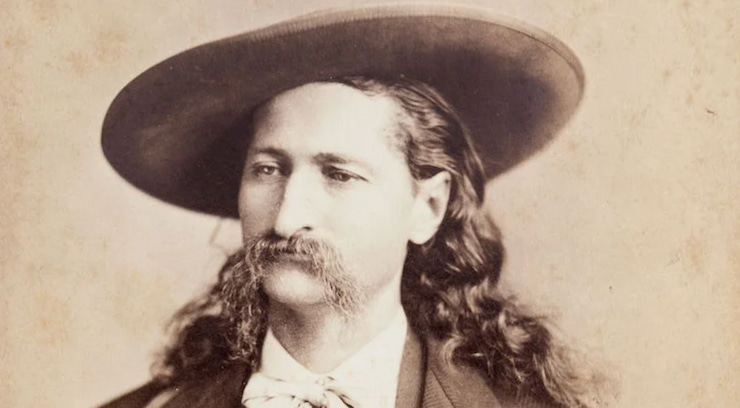
He is also believed to have taken part in the nation’s first quick-draw duel, facing off against Davis K. Tutt in 1865. This legendary encounter helped define the archetypal Western shootout, a scene now inseparable from the image of the Wild West and immortalized in countless films.
Hickok’s name is equally tied to gambling, and in fact, the famous duel with Tutt reportedly arose from a dispute over a gambling debt. Gambling would continue to play a dangerous role in his life, often serving as the spark for violence that followed him until his death.
Dead Man’s Hand Origin
The dead man’s hand story comes from the untimely end of the life of Wild Bill Hickock. In 1876, Bill was playing poker in Deadwood as he had done many times before. While he was playing, Jack McCall walked in and shot Bill in the back of the head. At the time he was shot, Bill was said to be holding a pair of black 8s and a pair of black Aces, and this is how this hand came to be known as “The Dead Man’s Hand.”

The reason McCall killed Wild Bill is not clear. Some have speculated that it was in revenge for Bill killing one of his relatives. Another theory is that he was hired by a local criminal gang who were worried about Hickock’s reputation for lawmaking. Others have suggested he did it just for notoriety.
One of the most commonly believed explanations is that McCall lost a lot of money to Bill in a game of poker the day before the shooting. After Bill took McCall’s money, it was said that he had given a small amount back and suggested that McCall buy himself a meal. Rather than see this as a gesture of goodwill, McCall took this as a sign of disrespect, and Bill had been trying to humiliate him.
What Happened to Wild Bill’s Killer
After the shooting, McCall attempted to flee on horseback, but his saddle was loose and he fell off, leading to his swift arrest. With so many witnesses to the crime, it seemed almost certain he would be found guilty. An impromptu trial was held soon after, during which McCall claimed he had shot Wild Bill in revenge for Hickok allegedly killing his brother. To the astonishment of many, after only two hours of deliberation, the jury returned a verdict of not guilty.
Fearing for his safety, McCall left Deadwood and fled to the Wyoming Territory. There, he openly bragged in saloons about killing the legendary Wild Bill Hickok, a mistake that would come back to haunt him. Within months, he was arrested again after authorities ruled that his first trial had been invalid, as it had taken place in Indian Territory and held no legal authority.
A new trial began on December 4, 1876, and just two days later, McCall was found guilty and sentenced to death. On March 1, 1877, at only 24 years old, Jack McCall was hanged in a public execution in Yankton and was reportedly buried with the noose still around his neck.
The Dead Man’s Hand in Pop Culture
Because Wild Bill was such a towering figure of the Old West, his life and death have been retold in numerous films and television shows. One of the most notable portrayals appears in the hit HBO drama Deadwood, where his character and tragic murder are depicted in the first season (as shown below).
His story was also the focus of the 1995 film Wild Bill, which centered on his final days in Deadwood. Beyond that, Hickok has appeared in countless Westerns throughout the 20th century, with on-screen depictions dating back as far as the 1930s, cementing his place as one of the most enduring legends of the American frontier.
In addition, because of its grim backstory and the link to the sudden and tragic death of Wild Bill, the aces and eights meaning is one of bad luck, misfortune, danger, and death. The hand’s association with misfortune has been used as a symbol for death, bad luck, and foreshadowing in shows like The X-Files.
This is also the case in video games like Red Dead Redemption and Fallout, as well as in books and comics like Marvel’s Daredevil and Punisher. It’s also been repeatedly used in music as symbolism, such as Motorhead’s “Ace of Spades” and Blue Öyster Cult’s “I am the Storm”.
Conclusion
The aces and eights Dead Man’s Hand is one of the most captivating tales in poker lore. It ties together one of the Old West’s most iconic figures, an untimely death, and a lingering air of mystery. Its intrigue has carried it far beyond the poker table, inspiring countless appearances in film, television, literature, and music, and it’s likely to remain a part of popular culture for many years to come.
If you want to test your luck with the Dead Man’s Hand, we recommend trying CoinPoker. It’s a top-rated real money poker site that offers fair rake, generous rakeback, and consistently high traffic in both cash games and tournaments, so you’ll always find a game for you running, day or night.