Fact Checked by


Hundreds of online exchanges list altcoins, meaning traders must consider their priorities when selecting a provider. The most important factors include low fees, support for a wide range of markets, and a safe trading experience. Read on to discover the best altcoin exchange in 2026. We’ve researched the top platforms for cryptocurrency traders, covering everything from security and commissions to account minimums and leverage.
Comparing the Best Altcoin Exchanges for 2026:
Consider these platforms when choosing the best altcoin exchange:| Exchange Name | Number of Altcoins Listed | Trading Fee | Fiat Payments? | Founded |
|---|---|---|---|---|
| Margex | 48 | 0.019% (limit orders), 0.06% (market orders) | Yes | 2019 |
| MEXC | 2,900+ | 0% (limit orders), 0.02% (market orders) | Yes | 2018 |
| Coinbase | 257 | 1.49% (standard conversion fees) | Yes | 2012 |
| Binance | 426 | 0.1% | Yes | 2017 |
| Exodus | 100,000+ | Built into the quoted exchange rate | Yes | 2015 |
| OKX | 295 | 0.08% (limit orders), 0.1% (market orders) | Yes | 2017 |
| BloFin | 300+ | 0.1% | Yes | 2019 |
| Kraken | 200+ | 0.25% (limit orders), 0.4% (market orders) | Yes | 2011 |
| Uphold | 300+ | Averages 1.6% to 2.95% | Yes | 2015 |
| Bybit | 1,500+ | 0.1% | Yes | 2018 |
| PrimeXBT | 35 | 0.01% (limit orders), 0.02% (market orders) | Yes | 2018 |
| KuCoin | 700+ | 0.1% | Yes | 2017 |
Reviewing the Top Altcoin Exchanges
Read on for more information about the top altcoin trading platforms. Discover how each provider compares for available altcoins, fees, tools, safety, and more.1. Margex – The Overall Best Altcoin Exchange
- Supported Altcoins: 48
- Trading Fees: 0.019% (limit orders), 0.06% (market orders)
- Fiat Payments: Yes
- Founded: 2019

Pros
- The overall best trading platform for altcoins
- Offers leverage of up to 100x
- Market makers pay commissions of just 0.019%
- Go long or short on all supported pairs
- Register an account with an email address only
Cons
- Lists just 48 altcoin markets
- Does offer spot trading
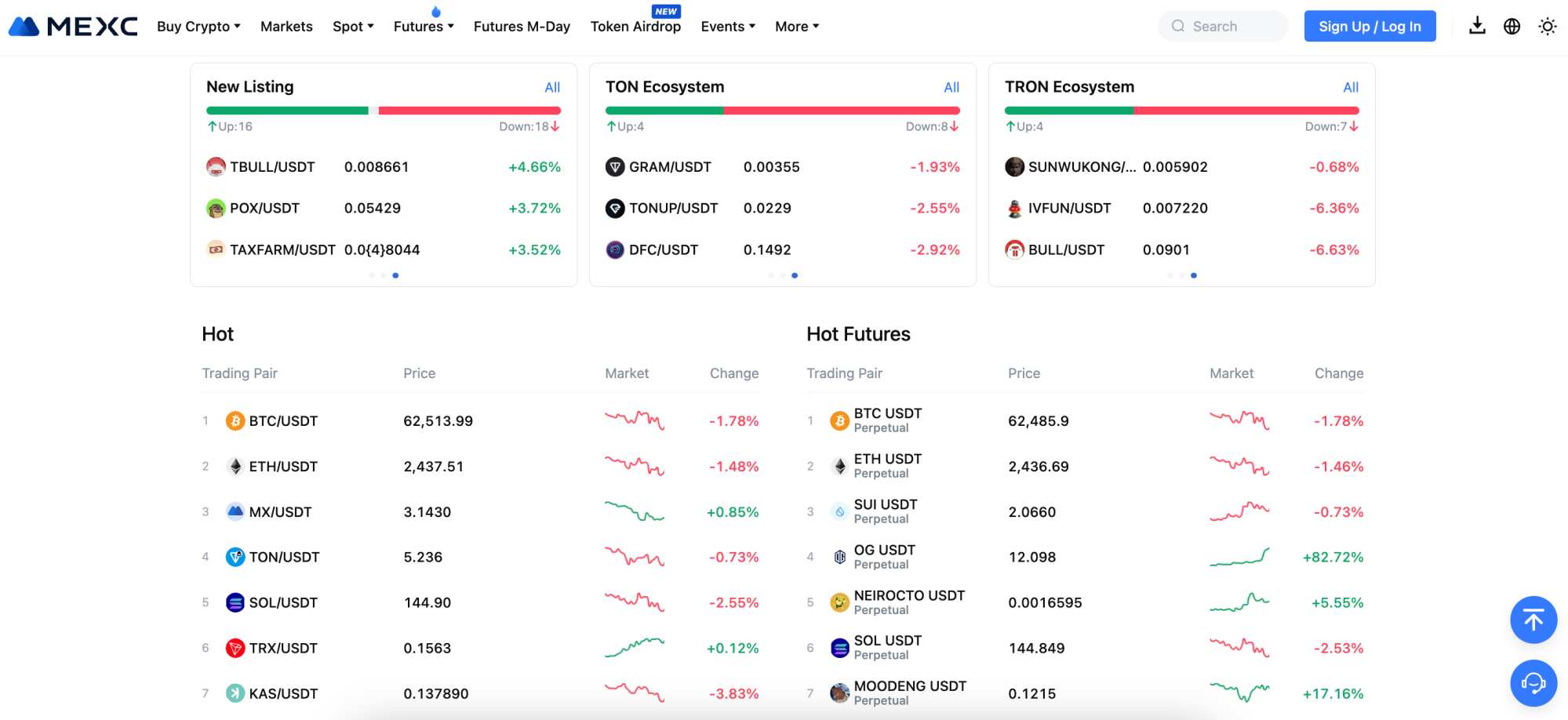
2. MEXC – Buy and Sell Over 2,900 Altcoin Markets
- Supported Altcoins: 2,900+
- Trading Fees: 0% (limit orders), 0.02% (market orders)
- Fiat Payments: Yes
- Founded: 2018
Pros
- Trade over 2,900 altcoin markets
- Market makers get 0% commissions
- Also supports hundreds of perpetual futures
- Leverage of up to 200x is available
- Easily deposit funds with a debit/credit card
Cons
- The Android app has poor user ratings
- Isn’t regulated in any countries
3. Coinbase – One of the Best Altcoin Exchanges for Beginners
- Supported Altcoins: 257
- Trading Fees: 1.49% (standard conversion fees)
- Fiat Payments: Yes
- Founded: 2012

Pros
- Has regulatory approval in multiple countries
- Lists 257 altcoin markets
- One of the best options for beginners
- Instantly buy cryptocurrency with a debit/credit card or PayPal
- Choose between a custodial or non-custodial wallet
Cons
- Standard commissions of 1.49% per slide
- Perpetual futures are only available in select countries
4. Binance – A Great Option for Advanced Altcoin Traders Seeking Charting Tools
- Supported Altcoins: 426
- Trading Fees: 0.1%
- Fiat Payments: Yes
- Founded: 2017
 It charges competitive trading commissions, starting at 0.1% per slide for makers and takers. Commissions are reduced when trading higher amounts, or holding Binance’s native altcoin, BNB. Binance also offers derivative products, including options, delivery futures, and perpetual futures. It also supports earning tools with high APYs.
Pros
- Trusted by over 237 million users
- One of the best options for advanced charting tools
- Offers native software for desktops and mobiles
- Charges just 0.1% per slide
- Supports spot trading and derivative products
Cons
- Some fiat currencies aren’t supported
- Beginners might find the platform overwhelming
5. Exodus – Swap Over 100,000 Altcoins via a Non-Custodial Wallet
- Supported Altcoins: 100,000+
- Trading Fees: Built into the quoted exchange rate
- Fiat Payments: Yes
- Founded: 2015
 Exodus is available on most device types, including desktops, mobiles, and browsers. Supported operating systems include Android, iOS, Windows, Mac, and Linux. Exodus also offers staking rewards on select altcoins, including Aptos, Solana, Cardano, Tezos, Ontology, and Kava. The main drawback is Exodus’ lack of analysis tools, such as indicators and order books.
Pros
- Supports over 100,000 altcoins
- The best market prices are sourced from liquidity pools
- Buy cryptocurrencies with a debit/credit card
- Store altcoins in a non-custodial wallet
- Available on desktops, mobiles, and browsers
Cons
- Limited analysis features are available
- Micro-cap altcoins come with slippage risks
6. OKX – Low-Fee Trading for Spot Markets and Derivatives
- Supported Altcoins: 295
- Trading Fees: 0.08% (limit orders), 0.1% (market orders)
- Fiat Payments: Yes
- Founded: 2017

Pros
- Buy altcoins with a debit/credit card
- Minimum Visa and MasterCard purchase of just $5
- Lists 295 altcoins
- Spot trading commissions start from 0.08%
- One of the biggest altcoin exchanges for trading volumes
Cons
- Doesn’t accept traders from the US
- All account holders must complete KYC
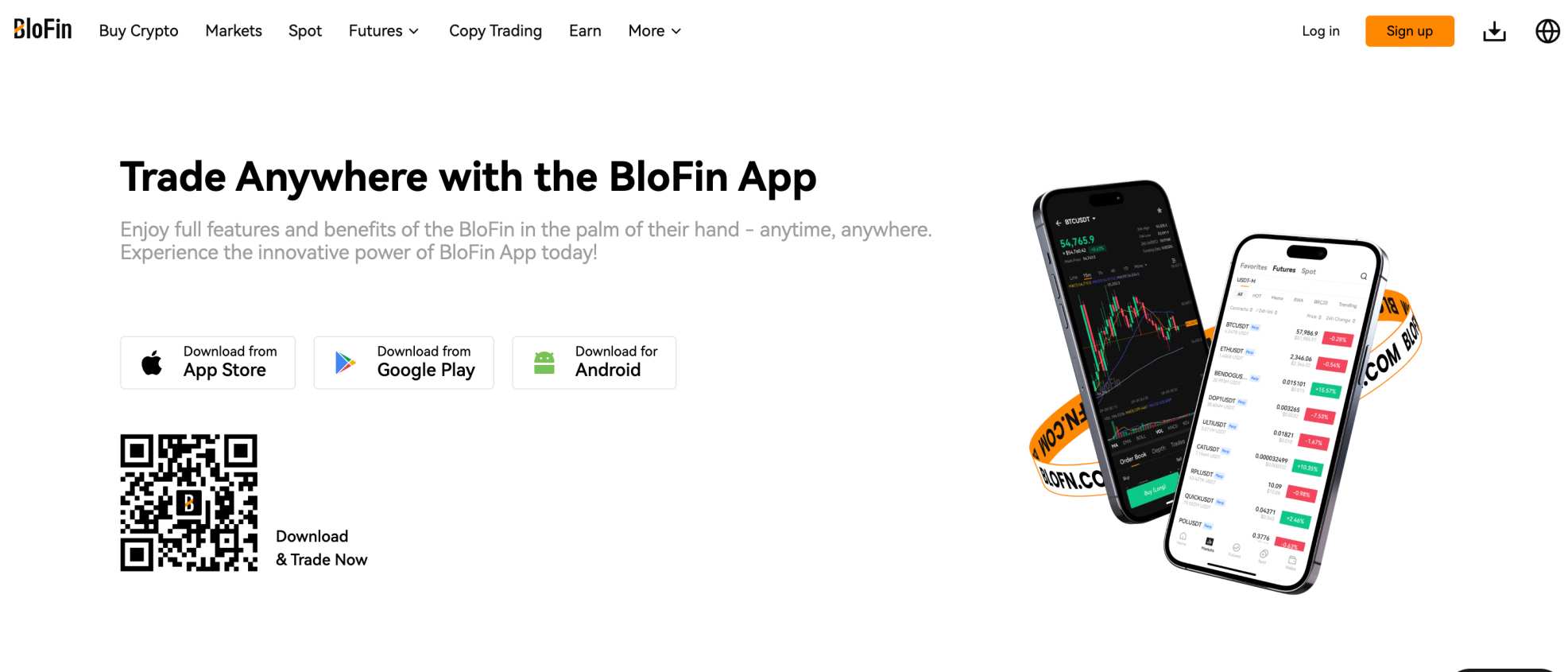
7. BloFin – Diverse Altcoin Exchange With Spot Trading, Futures, and Automation Tools
- Supported Altcoins: 300+
- Trading Fees: 0.1%
- Fiat Payments: Yes
- Founded: 2019
Pros
- Supports over 300 altcoins
- Trade via spot markets or futures
- Perpetual contracts offer leverage of up to 150x
- No KYC is required when opening an account
- A great option for automation tools
Cons
- Isn’t regulated in any country
- Much lower trading volumes than tier-one exchanges
8. Kraken – One of the Original Altcoin Exchanges With Industry-Leading Security
- Supported Altcoins: 200+
- Trading Fees: 0.25% (limit orders), 0.4% (market orders)
- Fiat Payments: Yes
- Founded: 2011

Pros
- One of the first altcoin exchanges to launch
- Offers industry-leading security protocols
- Provides verifiable proof of reserves
- Choose between a user-friendly or advanced platform
- Lists over 200 altcoins
Cons
- Lack of transparency on instant buy fees
- The lowest spot commissions require significant volumes
What is an Altcoin Exchange? The Basics
Altcoin exchanges enable traders to buy and sell popular altcoins, such as Ethereum, XRP, Litecoin, and Solana. Exchanges make money from trading commissions, which are typically charged against the total position size, per slide. For example, suppose you buy $1,000 worth of altcoins at a 0.1% commission. You’d pay just $1 to enter the market. You’d pay 0.1% again when closing the trade. Some crypto exchanges enable users to buy altcoins with fiat money, such as USD, EUR, and GBP. Payment methods often include debit/credit cards and local bank transfers. Altcoin markets will vary depending on the exchange. Some offer spot trading markets, with trades executed ‘on the spot’. Others specialize in derivative products like perpetual futures. These products offer more flexibility, such as short-selling and leverage. Nonetheless, most altcoin exchanges are centralized, which invites counterparty risks. This is why seasoned traders only keep small amounts on exchanges, with the majority of funds withdrawn to a private wallet.Key Criteria When Selecting The Best Altcoin Exchange
Over 700 altcoin exchanges are listed on CoinMarketCap, meaning a significant number of providers to choose from. The best practice for traders is to assess key priorities, such as fees, supported markets, and payment methods. Read on for the most important considerations when selecting an exchange.Available Altcoin Markets
Some traders prefer cryptocurrency exchanges with a substantial number of altcoins, ensuring market opportunities can be capitalized on with ease. Otherwise, you’d need accounts with multiple exchanges. You’d also need capital available on each platform. Our research shows that the best altcoin exchange for available markets is MEXC. It currently lists over 2,900 altcoins, with new markets being added almost daily. It’s particularly popular for trading new cryptocurrencies, including those that have recently completed their ICO/presale campaigns.
Low Trading Commissions
Trading commissions must be paid when trading altcoins. This is charged as a percentage against the total trade size. The only exception is MEXC, which offers commission-free trading when placing limit orders. Those preferring the simplicity of market orders might like Margex. It charges 0.06% per slide, meaning commissions of just $0.60 for every $1,000 traded. Do note that some altcoin exchanges charge fees based on the monthly trading volume. This means lower commissions when trading higher amounts.What is the Spread in Crypto?
- The spread isn’t exclusive to crypto; it’s a fee found in most trading markets.
- It’s the difference between the buy and sell prices quoted by the exchange.
- This pricing gap is an indirect fee, as the spread needs to be covered to break even.
- For example, suppose the spread is 1%.
- You’d need the purchased altcoin to increase by more than 1% to make a profit.
Available Altcoin Liquidity
Liquidity is another important factor when choosing the best exchange for altcoins. In a nutshell, liquidity is the amount of funds available when trading specific markets. High liquidity ensures traders can enter and exit positions seamlessly, without needing to accept sub-par prices. In contrast, low liquidity increases the trading cost, as less favorable prices must be accepted to push orders through. Tier-one exchanges with the most active traders provide the highest liquidity. This includes Binance, OKX, Kraken, and Coinbase.Available Payment Methods and Fees
First-time traders will need to choose an altcoin exchange that accepts their preferred currency and payment method. Fees should also be reviewed, as fiat deposits can be costly. For example, those wishing to buy altcoins instantly will prefer a debit/credit card payment. Margex and MEXC are good options here, with both Visa and MasterCard supported. However, the average fee will be 3-5%, depending on the fiat partner. The cheaper option is to deposit funds via a local bank transfer. Popular networks include ACH (US) and SEPA (EU). These banking methods are often processed free of charge. Coinbase and Kraken are the best options for bank transfers, as payments are usually instant.
Safety and Security
While fees, available markets, and liquidity are key factors, these shouldn’t be at the expense of safety. Altcoin traders preferring a regulated environment will like Coinbase, considering it’s licensed in the US, Singapore, Australia, Europe, and other locations. However, Coinbase has strict KYC procedures, which won’t appeal to everyone. Alternatively, no-KYC exchanges like Margex also offer a safe experience but without a regulatory framework. Security measures include proof of reserves, cold storage wallets, and two-factor authentication.Why is Cold Storage Important?
- Traders should ensure cold storage is offered when choosing the best crypto exchange for altcoins.
- Put simply, this means client-owned altcoins are kept offline.
- In theory, cold wallets can’t be hacked remotely, as they aren’t connected to live servers.
Fees to Consider When Using an Altcoin Exchange
Let’s take a closer look at the different fee types when using altcoin exchanges.Deposits
Depending on the altcoin exchange, you can often deposit fiat money directly into the account. The funds can then be used to buy altcoins manually. For example, Coinbase offers free deposits on local bank transfers, including USD, EUR, and GBP. This is also the case with Kraken. It’s also possible to directly deposit altcoins. You won’t be charged by the exchange, but network fees apply when executing the transfer. The deposited altcoins can then be used to trade.Instant Purchases
Instant purchases are slightly different from traditional deposits. You’ll be using a debit/credit card or e-wallet to buy altcoins immediately. The transaction is settled in real-time and the cryptocurrencies are instantly added to your exchange wallet. This option is ideal for first-time investors with limited trading experience. However, instant purchases are also the most expensive. As mentioned, expect to pay around 3-5% of the transaction size.Trading Commissions
Trading commissions are charged when buying and selling altcoins. They’re almost always charged as a percentage. Meaning, the more traded the higher the commission. What’s more, commissions are charged ‘per slide’. This means traders pay commissions when entering and exiting the market. Here’s an example:- Let’s say your chosen altcoin trading platform charges 0.2% per slide
- You buy $4,000 worth of Ethereum, so pay a commission of $8 (0.2% x $4,000)
- Ethereum has increased by 50%, so your position is now worth $6,000
- You cash out, again paying a 0.2% commission. This amounts to $12 (0.2% x $6,000)
- Market makers place limit orders. They provide liquidity to altcoin exchanges so generally get lower commissions.
- Market takers place market orders. They use liquidity that’s already been provided, so generally pay higher commissions.
Altcoin Conversions (Swaps)
Most altcoin exchanges charge fees when converting (swapping) cryptocurrencies. This enables users to exchange one altcoin for another without using the spot trading exchange. For example, swapping Litecoin for Dogecoin or Ethereum for Uniswap.
Withdrawals
Even the best altcoin exchanges charge withdrawal fees. Cryptocurrency withdrawals often come with a fixed fee, which can include a markup. For example, suppose the Solana network fee is 1 SOL, but your chosen exchange charges 3 SOL. This means you’re paying a 2 SOL premium. Fiat withdrawals often attract fees too, although local bank transfers can be free. It’s important to assess these fees from the get-go.Conclusion
We’ve ranked the best altcoin exchanges for the most important factors, including fees, safety, and available markets. Margex is our top pick; it offers super-low commissions and leverage of up to 100x. It also offers a KYC-free experience, advanced security protocols, and instant altcoin purchases with Visa and MasterCard. There’s also a copy trading feature aimed at beginners, meaning altcoins can be traded passively.FAQs
What is the best site for altcoins?
What are altcoins?
Which crypto exchange has the most altcoins?
References
- What is a spot market? (Corporate Finance Institute)
- Top cryptocurrency spot exchanges (CoinMarketCap)
- This type of coin is ‘among the riskiest of cryptocurrencies,’ investing expert says—here’s what to know (CNBC)
- Market makers vs. market takers (CME Group)