Fact Checked by


The ubiquitous nature of the modern-day video game controller cannot be denied. Virtually every young person growing up is at least aware of an Xbox or PlayStation controller, even if they are not a gamer.
The two-handed contraption adorned with mini-joysticks and buttons is as familiar these days as the keyboard and mouse, both of which are used in countless settings, so we should not be surprised when game controllers pop up in a different lane from gaming.
Earlier this week we looked at how surgeons were using PlayStation controllers to carry out operations thousands of miles away (granted on a pig) and we may also be aware that the US military has used controllers to fly its drones and control other weaponry and countermeasures for a good while at least.
It makes perfect sense of course, many people joining the military will have played video games, and being given a controller will be second nature to them – unless it’s a Switch controller with its weird button differences for no reason.
Wired has run a feature highlighting how entrenched game controllers – or at least a militarized version of them – now are in widespread use when it comes to operational needs.
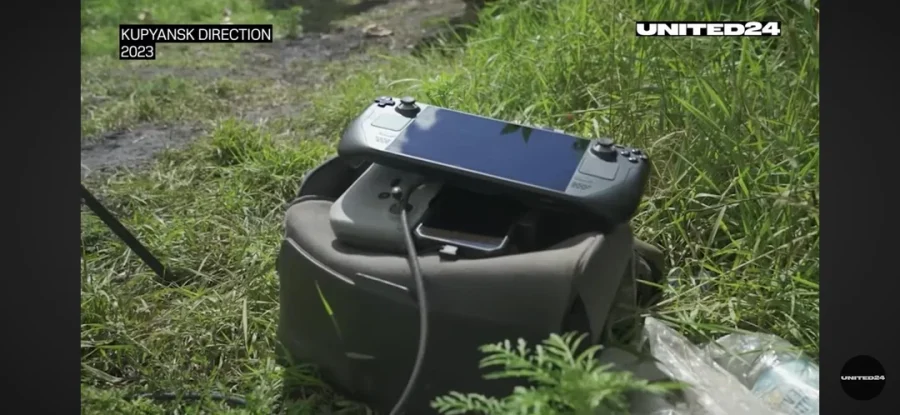
We have even seen footage of the Ukrainian military using actual PlayStation controllers and even Steam Decks to launch and guide missiles but there has definitely been a shift towards bespoke controllers using the same familiar format as a traditional controller but without a pause button, maybe replacing it with a Launch Nuke control instead.
Wired reports that the Freedom of Movement Control Unit (FMCU) from defense contractor Ultra has actually been in play since around 2010 but that now it is seeing more use than ever before. Maybe that is because of the current state of the world but also because weapons systems are changing, as is the role of the traditional operational warfighter.
Military tech expert Peter Singer tells Wired, “The gaming companies spent millions of dollars developing an optimal, intuitive, easy-to-learn user interface, and then they went and spent years training up the user base for the US military on how to use that interface,”
“These designs aren’t happenstance, and the same pool they’re pulling from for their customer base, the military is pulling from … and the training is basically already done.”
Let’s hope all these new toys last longer than the Switch’s Joycons for all our sakes.
Featured Image: Courtesy of Ultra Electronics