The volume of market data available to retail traders has never been higher. Their decision-making accuracy? It hasn’t necessarily improved with it.
In the mid-1970s, a professional trader’s day started with a newspaper, a phone, and a price sheet. The information was limited. The decisions were sharp.
Today, the same trader opens a session to live news feeds, social media alerts, AI-generated summaries, economic calendars, analyst commentary, and four screens refreshing simultaneously. The information is endless, and for a significant portion of the trading community, decision-making has gotten worse.
The cost of too much
Researchers at the Federal Reserve and the Milenio MIPP Institute studied the relationship between information volume and investor performance, building an information overload index using data from the New York Times stretching back to 1885. The findings were direct: higher information overload is associated with lower trading volume and deteriorating decision accuracy. The more investors are bombarded, the less efficiently they process what actually matters.
A separate study on cognitive load and financial markets found that a one-standard-deviation increase in information complexity reduces the speed at which traders incorporate new data by 18%, while the duration of mispricing increases by 23%. The researchers identified three mechanisms behind this: selective attention failure, processing errors, and what they called strategic complexity.
In plain terms, more information does not produce better decisions. At a certain point, it produces slower ones, or none at all.
How the attention economy entered the trading room
Herbert Simon, economist and Nobel laureate, once wrote that “a wealth of information creates a poverty of attention.” He wrote that before the internet existed, and the observation has aged into something close to prophecy.
The trading environment in 2026 is embedded in the attention economy, with platforms competing for traders’ eyes. Social media algorithms surface the loudest signals, not the most useful ones. AI commentary tools generate summaries of summaries, adding another layer of interpreted noise on top of already noisy data. Real-time news aggregators fire alerts every few minutes, each framed as urgent.
The volume of signals has increased sharply. The quality of each signal has not kept pace. A trader now needs to distinguish between information that’s genuinely useful to their strategy and information that’s simply available. That’s a cognitive task on top of every other cognitive task that the trading session already demands.
Attention economics confirms that human cognitive capacity has a ceiling. When input exceeds that ceiling, accuracy declines, confidence erodes, and response times slow. All three of those outcomes are expensive inside a trading session.
The execution problem nobody talks about
Information overload does not show up on a trade log as “cognitive failure.” It shows up as a missed entry, an early exit, or a position held too long because three conflicting analysts said three different things and none felt conclusively wrong.
The decision-making process for beginners processing 12 or more indicators at once slows down by 3–8 seconds per trade. That window, brief as it sounds, is where conviction dissolves. A trader who had a clear strategy at 09:00 begins second-guessing it by 10:00, not because the market changed but because the commentary did.
Reactive trading is the most direct product of this dynamic. Instead of acting on a prepared strategy, the trader acts on the latest input. A headline moves them out of a position they planned to hold, or a social media post makes them doubt a setup they had spent two days researching. The trade they execute is not the trade they planned. The result is performance that does not reflect the trader’s actual analytical ability, because the analytical work gets overridden at the moment of execution.
This is the execution cost of cognitive overload. It sits between a trader’s strategy and their P&L, invisible and unmeasured, eroding returns that should have been captured.
What separates the traders who perform
The distinction between traders who manage information and those who are managed by it is not determined by talent but by their process.
The traders who perform consistently in high-noise environments tend to share a specific approach. They define their signals before the session opens, not during it. They decide in advance which data points are relevant to their strategy and which are not. They do not update that list mid-session unless the market structure itself has changed, not because a pundit changed their view on X.
Experts in high-stakes, time-compressed decision environments reduce cognitive load through pattern recognition and not information accumulation. The most experienced traders have narrowed their inputs to the ones on which their edge depends, and they have trained themselves to ignore the rest.
This is less about disconnecting from markets and more about having a defined process for what affects the decision. A trader with two reliable signals and the discipline to act on them will outperform a trader with twenty signals and the hesitation that comes with them.
The platform is one piece of a larger picture
Execution quality and platform stability can’t be seen as secondary concerns. When a trader has filtered the noise and is ready to act, slippage, latency, or a requote adds friction at the worst possible moment.
A strong trading environment cannot create conviction for the trader, but it can reduce unnecessary friction once that conviction exists. That distinction matters in high-noise markets, where the space between decision and execution is already crowded with doubt, alerts, commentary, and fast-moving price action.
For CFD traders facing this environment, Exness could prove invaluable. The broker reports the most precise execution in the market,1 alongside over three times less slippage,2 resulting in precise execution during high-impact news.3 For CFD traders trying to act on a prepared strategy rather than reacting to noise, execution quality matters because even a clear decision can be weakened if the final fill does not reflect the conditions the trader intended to trade.
Spreads are part of the same equation. Exness has recorded the lowest spreads in the market across 28 major and minor forex pairs,4 giving active CFD traders a more stable cost environment when filtering signals across currencies. This does not replace analysis, but it reduces one more source of uncertainty between the plan and the trade.
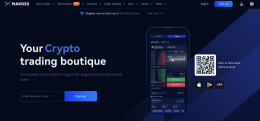
Exness Terminal also supports discipline. When CFD traders are already surrounded by too much information, the last thing they need is a fragmented workspace. To counter this, Exness Terminal brings charting, trading, position management, and account controls into one web and mobile environment, with features such as multi-chart layouts, one-click trading, and built-in risk management tools. The value is not more information for its own sake but rather clearer context and fewer steps between analysis, decision, and execution.
Risk controls also matter when markets move faster than a trader can process. Exness’ 0% stop out level allows positions to remain open until stop out at 0% margin, while Negative Balance Protection helps ensure CFD traders do not lose more than their account balance.4 5 These protections do not remove trading risk or fix poor decisions; they help define the environment in which risk is managed.
Operational reliability is also part of that environment. At Exness, over 98% of withdrawal requests are processed automatically,6 although processing times may vary depending on the chosen payment method.⁶ For CFD traders, access to funds and reduced operational friction matter because the trading experience does not end when a position closes.
But even a technically superior platform cannot fix a decision that was never made clearly. The broker handles execution. The trader handles conviction, and in 2026, conviction requires managing the information environment as actively as managing the position itself.
The edge that comes from less
There’s a counterintuitive argument worth considering. In an era where every data point is accessible and every opinion is broadcast in real time, the ability to consume less deliberately has become a measurable advantage.
The traders who will perform consistently going forward are the most focused, and not the most informed. Information discipline, the deliberate narrowing of inputs to what is signal and the conscious rejection of what is noise, is a skill. It’s trainable, and in 2026, it’s arguably more valuable than any individual strategy. A good strategy poorly executed under cognitive pressure produces the same result as a bad strategy.
The attention economy wants more consumption. Better performance, for most traders, requires less of it.
1 Most precise execution claims refer to average slippage rates on pending orders based on data collected between September 2024 and July 2025 for XAUUSD, USOIL, and BTC CFDs on the Exness Standard account vs similar accounts offered by four other brokers. Delays and slippage may occur. No guarantee of execution speed or precision is provided.
2 3x less slippage claims refer to average slippage rates on pending orders based on data collected between September 2024 and July 2025 for XAUUSD, USOIL, and BTC CFDs on Exness Standard account vs similar accounts offered by four other brokers. Delays and slippage may occur. No guarantee of execution speed or precision is provided.
3 Exness Pro has the lowest median spreads out of 16 brokers across 28 FX majors and minors, in the week of 5-10 April 2026, comparing tightest spread-only accounts across brokers.
4 Exness allows positions to remain open until stop out at 0% margin level. Once 0% margin level is reached, the position is closed regardless of whether the trader has decided to close it.
5 Trading is risky. T&Cs apply.
6 At Exness, over 98% of withdrawals are processed automatically. Processing times may vary depending on the chosen payment method.
7 Spreads may fluctuate and widen due to factors including market volatility and liquidity, news releases, economic events, when markets open or close, and the type of instruments being traded.