Fact Checked by


The rules for Last Card in New Zealand are easy to learn and share much of the same fun as Uno, Crazy Eights, or Mau Mau, with a few notable twists that set it apart from these games.
This guide will walk you through the essentials: game setup, standard rules, and frequently used variations. You’ll also find helpful tips to sharpen your strategy, plus suggestions for some other great card games.
Last Card Rules
Before we dive into exactly how to play Last Card in NZ, let’s take a quick look at a few basic rules and interesting facts about the game.
| Deck | 1 or more standard 52-card decks |
|---|---|
| Number of Players | 2+ |
| Origin | New Zealand |
| Special Cards | Jokers, Aces, Twos, Eights, Jacks |
How to Play Last Card in NZ
Last Card rules are straightforward, making this a great game for people of all ages. To show you exactly how the game works, we’ve provided an easy-to-follow guide that outlines the rules of Last Card.
Deal Cards
Start by shuffling the cards and dealing five cards to each player or duo. The game begins when all players have received the correct number of cards.Start of the Game
The dealer takes the first card from the top of the deck. The player to the left of the dealer must then make the first move.First Move
The player must follow the first card by placing down a card of the same suit or number.Make Your Decision
If the player cannot match the suit or number, they must take a card from the deck. The game then passes to the next player.Finish the Game
Last Card rules NZ state that the winner is the player who gets rid of all of their cards first. You must remember to say “last card” out loud when you have just one card left in your hand. An additional card must be taken if you forget.
What are the Special Cards in the Last Card Game?
The rules of Last Card can be made even more exciting thanks to special cards. Each of these cards changes the gameplay slightly. To show you what they are, we’ve provided more information below.
| Special Card | Action |
|---|---|
| Aces | Changes the suit |
| Two’s | The next player must pick two cards |
| Eight | The next player misses a turn |
| Jack | The player gets another turn once they play the Jack card |
| Jokers | The next player must pick up six cards and change the suit or Joker acts as a wild |
Special Card Rules of Last Card NZ
As mentioned in the previous section, Last Card NZ includes several “special cards.” Below, we’ve explained each card’s function and when it’s playable to help clarify their roles.
Aces
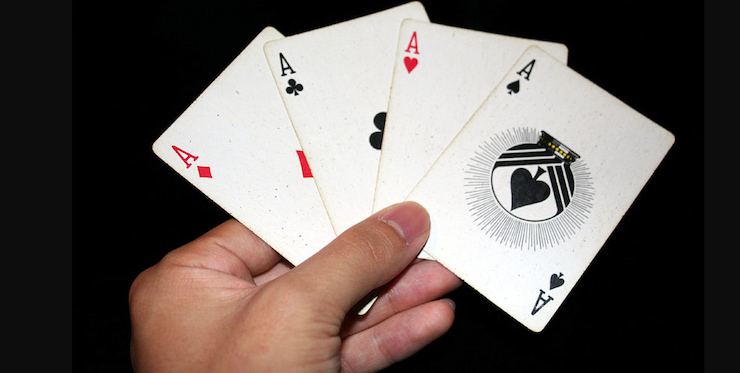
You can play an Ace on any other card in the deck. After playing, you get to choose the suit and the next player can play any number in that suit.
Twos

Twos can be played on any card, and the next player must draw two cards from the deck before playing again. However, if that player also holds a two, they can “stack” it, playing their two on top of the previous one. This forces the following player to draw two cards, unless they too have a two to continue the chain. The sequence continues until someone is unable to play a two, breaking the chain and drawing the accumulated penalty.
Eights

When you play an eight, the next player’s turn is skipped, unless they also have an eight. In that case, they can play their eight, which skips the following player instead.
Jacks

When you lay down a jack, you get to have another turn immediately, and you also get to change the suit, essentially letting you play any card you want after your jack.
Joker
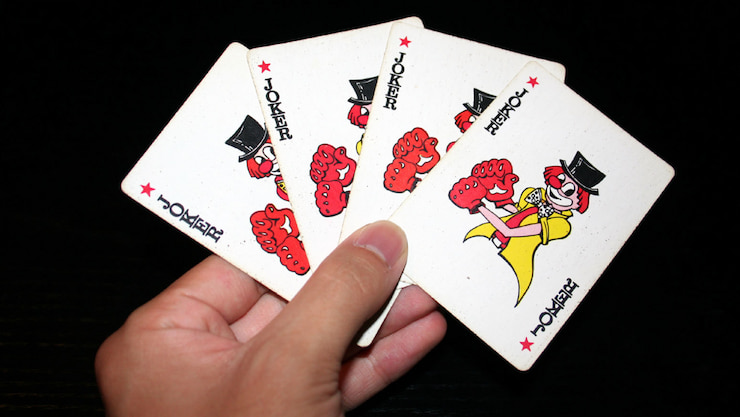
There are two common rules for joker cards. The first is that if someone lays down a joker, the next player must pick up six cards and change the suit.
A commonly played alternative is that the Joker acts as a wild card and can substitute for any other card in the game (as long as it is a valid card to play). This includes twos, and the same stacking rules would apply.
Optional Rules of Last Card
So far, we’ve covered the standard rules of Last Card, but these can vary depending on who or where you play. Many people use optional rules to make the game more exciting, so much so that these have become their personal ‘standard.’ That’s why it’s essential to agree on the rules before you start playing. Below, you can see some of the different optional rules that are commonly used.
- 2 and 5 are pick-up cards –Both two and five are pick up cards. When five is a pick up card the next player must pick up five cards but they can also be stacked like twos.
- 7 or 3 is a block card – You can lay a three or a seven to block, having to pick up cards after someone has played a two or a five
- 10 is skip – some people play with the number 10 as the skip card instead of 8
- No special card finish – Your last card played must be a standard card, not a special one like an Ace, Joker, Jack, etc.
Top 5 Tips to Keep in Mind When Playing Last Card NZ
Now that you have the answer to “How do you play Last Card?”, it’s time to look at a few helpful tips.
- Switch Between Decks – You can make the game last longer by using multiple decks. Don’t use a single deck for too long. Instead, switch between them.
- Play Multiple Cards – Last Card NZ rules indicate that multiple cards of the same value can be placed at once. Remember that the suit of the top card will become the current suit. So, be sure to factor that into your strategy.
- Don’t Forget to Call “Last Card” – It’s easy to get caught up in the action and forget to say “Last Card” when you only have one remaining card. This is a costly mistake, as you will then receive an additional card.
- Play 2s & 5s – You will force the next player to pick up cards when laying a 2 or 5. Last Card rules pick up means that 2 and 5 cards must be taken, respectively.
- Reverse the direction – Try and keep a 10 in your hand for the later stages of the game. Rules for Last Card NZ mean that this card reverses the direction.
Can I Play Last Card in NZ for Real Money?
Now that you understand how to play Last Card, it is important to note that this is not a game available online. Unlike roulette, blackjack, and other card games, Last Card does not feature on casino sites. It can only be played in person and is commonly enjoyed as a casual social game with family and friends.
Alternative Card Games Available at Online Casinos
While you won’t be able to play Last Card online, there are plenty of alternatives for you to choose from when you decide to gamble at online casinos in New Zealand, including the ones listed below.
Blackjack

Go up against the dealer in a bid to form a hand with a value as close to 21 as possible. European, American, Switch, Perfect Pairs, and Exposure are some of the popular online Blackjack games. Side bets add to the excitement, which includes 21+3 and Insurance. Most gambling sites offer this game and if you’d like to try it out for real money but would prefer not to spend a lot right away, you’ll be pleased to learn that there are many casinos that accept $2 deposits.
Poker

Poker is a versatile card game with many variants, each offering its own level of complexity. It’s one of the most popular casino card games: players can compete for real money either against each other in online and in-person poker rooms or against the house in casino versions like Caribbean Stud or Casino Hold’em. Texas Hold’em, Omaha, and Caribbean Stud are among the most widely played variants.
Baccarat

Like Last Card, Baccarat is a game with simple rules. There are three possible bets: banker win, player win, or tie. Punto Banco is the most common online variant. With this comparing card game, cards 2-9 are worth face value. 10, jack, queen, and king have no value, while aces are worth a single point.
The Bottom Line
The Last Card rules in NZ make it an easy and fast-to-learn game popular with friends and families alike. With just two players, or more, and a handful of optional twists, you can be dealing, announcing “Last Card,” and winning within minutes, while keeping every round fresh and fun.
If you are hoping to play for real money at casinos, you’re out of luck, as none offer it. However, there are several alternative card games, like blackjack and poker. For a seamless experience, BetWhale stands out as your best bet: with generous welcome bonuses, around‑the‑clock play, and plenty of card games, it’s a top option for real‑money gaming.
What are the rules for Last Card?
Can I play Last Card for real money?
What card changes direction in Last Card?
Can you put down multiple cards in Last card?
Responsible Gambling
Last Card is a game that can be enjoyed without any financial risks. However, there are many real money alternatives for players in New Zealand, which is why it’s important to practice responsible gambling. Setting a budget, never chasing losses, and taking regular breaks are some of the steps to take. If you require additional support, we recommend visiting the sites below.